Search

Search provisions, jump to a law or an article

The labour and social insurance Acts, item by item

Rules of employment, overtime agreements, social insurance filings: the Labor Standards Act (労働基準法) and the insurance Acts in their text in force, with a link to every item that you can put straight into a note for a client.

Connect your AI assistant

https://japanlaw.org/mcp

No sign-in. Steps for Claude, ChatGPT, Copilot and others

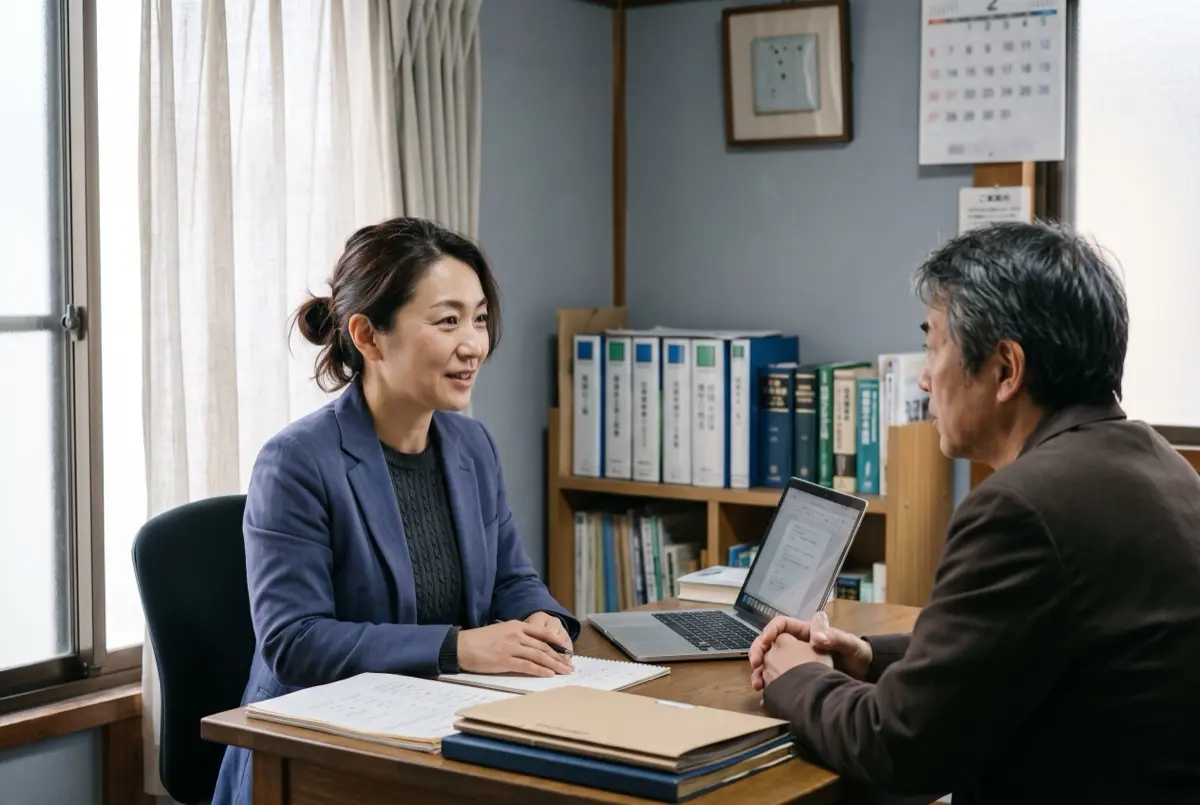
A labour and social security attorney talking with a client across her desk.

Example questions

The answers here are examples written for these pages, to show how an answer rests on the law. They are not legal advice: for your own case, read the official text and ask a qualified professional.

Example question

Which employers must have rules of employment, and what must they cover?

An employer that continuously employs 10 or more workers must draw up rules of employment and file them with the authorities. They cover working and break times, days off and leave, how wages are set and paid, retirement including the grounds for dismissal, and the other matters the Article lists.

Article 89, paragraph (1)

Labor Standards Act 労働基準法

  1. An employer that continuously employs 10 or more workers must prepare rules of employment covering the following particulars and must file those rules with the relevant government agency. The same applies if the employer has altered any of the following particulars:

    常時十人以上の労働者を使用する使用者は、次に掲げる事項について就業規則を作成し、行政官庁に届け出なければならない。次に掲げる事項を変更した場合においても、同様とする。

  2. (i)

    the particulars of the times at which work commences and ends, break times, days off, and leave periods; and the particulars of shifts, if it has workers work in two or more shifts;

    始業及び終業の時刻、休憩時間、休日、休暇並びに労働者を二組以上に分けて交替に就業させる場合においては就業時転換に関する事項

  3. (ii)

    the particulars of the means of determining, calculating, and paying wages (excluding special wages and other wages; the same applies below in this item); the end day of the pay period and payment date for wages; and wage increases;

    賃金(臨時の賃金等を除く。以下この号において同じ。)の決定、計算及び支払の方法、賃金の締切り及び支払の時期並びに昇給に関する事項

  4. (iii)

    the particulars of leaving employment (including grounds for dismissal);

    退職に関する事項(解雇の事由を含む。)

  5. (iii-2)

    if the rules of employment provide for a retirement allowance or severance pay, the particulars of the range of workers to whom those provisions apply; the means of determining, calculating, and paying that retirement allowance or severance pay; and the payment date for that retirement allowance or severance pay;

    退職手当の定めをする場合においては、適用される労働者の範囲、退職手当の決定、計算及び支払の方法並びに退職手当の支払の時期に関する事項

  6. (iv)

    if the rules of employment provide for special wages and other wages (excluding retirement allowance or severance pay) or a minimum wage, the particulars of this;

    臨時の賃金等(退職手当を除く。)及び最低賃金額の定めをする場合においては、これに関する事項

  7. (v)

    if the rules of employment include provisions that cause a worker to cover the cost of food, supplies for work, or any other expenses, the particulars of this;

    労働者に食費、作業用品その他の負担をさせる定めをする場合においては、これに関する事項

Read the rest on japanlaw.org

Example question

What must an overtime agreement (36協定) set out?

Which workers it covers, the period it applies to (one year at most), the cases in which overtime or work on days off is needed, the hours that may be added per day, month and year or the days off that may be worked, and the matters a Ministerial Order (省令) adds.

Article 36, paragraph (2)

Labor Standards Act 労働基準法

  1. The following particulars are to be specified in the agreement referred to in the preceding paragraph:

    前項の協定においては、次に掲げる事項を定めるものとする。

  2. (i)

    the range of workers whose working hours the employer may extend and whom the employer may have work on a day off, pursuant to the provisions of this Article;

    この条の規定により労働時間を延長し、又は休日に労働させることができることとされる労働者の範囲

  3. (ii)

    the applicable period (this means the period during which the employer may extend the working hours or have a worker work on their days off pursuant to the provisions of this Article, and is to be limited to one year; the same applies in item (iv) of this paragraph and paragraph (6), item (iii) of this Article);

    対象期間(この条の規定により労働時間を延長し、又は休日に労働させることができる期間をいい、一年間に限るものとする。第四号及び第六項第三号において同じ。)

  4. (iii)

    when the employer may extend the working hours or have a worker work on their days off;

    労働時間を延長し、又は休日に労働させることができる場合

  5. (iv)

    the number of hours by which the employer may extend the working hours it has a worker work per day, month, and year during the applicable period; and the number of days off on which the employer may have the workers work during the applicable period;

    対象期間における一日、一箇月及び一年のそれぞれの期間について労働時間を延長して労働させることができる時間又は労働させることができる休日の日数

  6. (v)

    particulars prescribed by Order of the Ministry of Health, Labour and Welfare as needing to be provided for in the agreement to ensure that the extension of working hours and work on days off are appropriate.

    労働時間の延長及び休日の労働を適正なものとするために必要な事項として厚生労働省令で定める事項

Read it on japanlaw.org

Example question

What work can only a Labor and Social Security Attorney do for a fee?

Preparing the applications and other papers the labour and social insurance laws require, filing them or acting for a client in those procedures, and preparing the books those laws require, among other things, when done for others, for a fee, as a business. Other Acts can make exceptions.

Article 27, paragraph (1)

Act on Public Consultants on Social and Labour Insurance 社会保険労務士法

  1. A person who is not a labor and social security attorney or a labor and social security attorney corporation must not, in response to a request from another person, perform as a regular business, for remuneration, the affairs listed in Article 2, paragraph (1), items (i) through (ii); provided, however, that this does not apply where otherwise provided by other laws or where the affairs are performed incidentally to business specified by Cabinet Order.

    社会保険労務士又は社会保険労務士法人でない者は、他人の求めに応じ報酬を得て、第二条第一項第一号から第二号までに掲げる事務を業として行つてはならない。ただし、他の法律に別段の定めがある場合及び政令で定める業務に付随して行う場合は、この限りでない。

Read it on japanlaw.org

The laws you will meet

Every law in the collection

Other use cases